
Milan’s ex-coni president poised to rescue italy’s football crisis
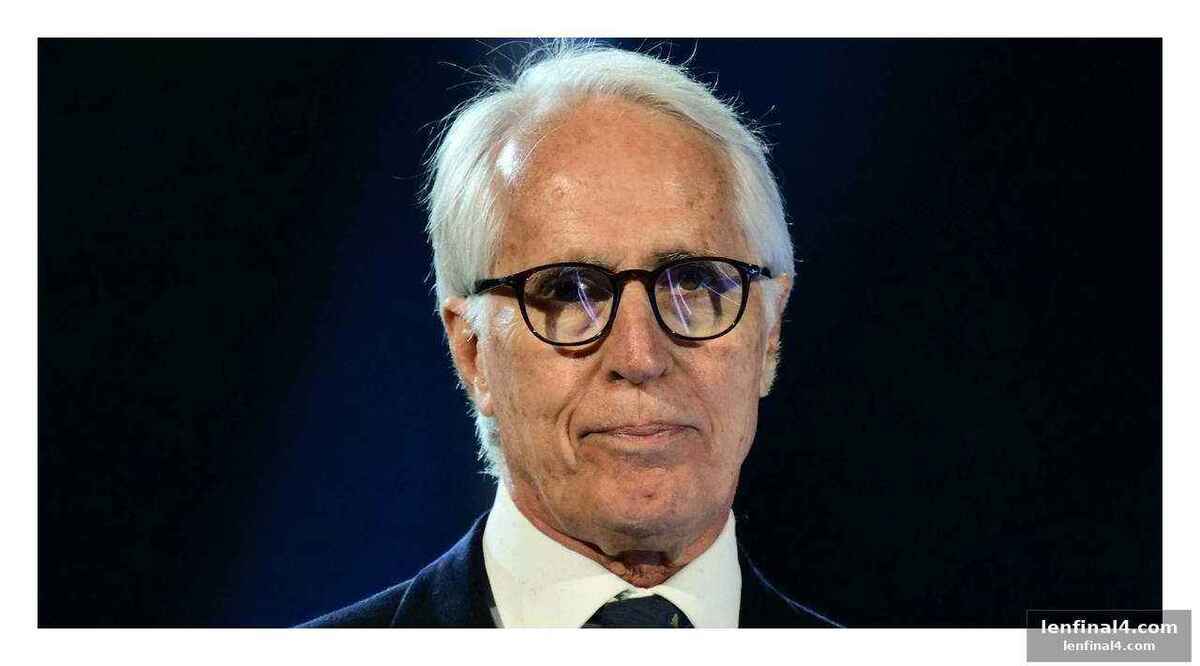
A seismic shift is brewing in Italian football. Giovanni Malago, the former president of the Italian National Olympic Committee (CONI), is being pushed forward as the unlikely savior of the struggling FIGC – the national football federation – following a stunning series of resignations and a desperate scramble for leadership.
A last-minute gamble on experience
The situation reached a fever pitch this week, triggered by the collective exit of Gabriele Gravina, Gennaro Gattuso, and Gianluigi Buffon from their respective roles. A damning third World Cup qualification failure prompted a swift and unified decision to seek a fresh face, and the Serie A board has landed on Malago.
According to Serie A boss Ezio Simonelli, a staggering 18 out of 20 clubs have reportedly endorsed Malago as the ideal replacement for Gravina. This isn’t a consensus built on passion; it’s a calculated assessment of experience, a pragmatic response to a rapidly deteriorating landscape.
Malago, who presided over CONI from 2013 to 2025 and currently serves on the International Olympic Committee, brings a level of institutional knowledge that’s sorely lacking within the FIGC’s current turmoil. He’s a seasoned administrator, accustomed to navigating the complex politics of elite sport – a skill set desperately needed to address the federation’s myriad problems.
But the path
to the presidency won’t be straightforward. The Serie A clubs, representing just 18% of the voting pool, face a significant hurdle. Italian amateur football, represented by the 34% of votes, wields considerably more influence in the election scheduled for June 22nd. This means Malago needs more than just boardroom approval; he requires tangible support across the entire footballing pyramid.Simonelli revealed that Malago will be engaging in ‘meetings with first-division clubs in the coming days’ to hammer out his strategy – a strategy that extends beyond simply securing the presidency. Infrastructure improvements, particularly in preparation for Italy’s role as a co-host for the 2032 European Championship, and the appointment of a new national coach are now firmly on the agenda. And, crucially, the UEFA boss, Aleksander Ceferin, has been vocal about Italy’s infrastructural shortcomings, recently citing the nation's stadiums as “among the worst in Europe.” A stark warning, indeed.
The stakes couldn’t be higher. Italy’s footballing future hangs in the balance, and Malago’s gamble – a bold, perhaps audacious one – represents the country's last, best hope of regaining its footing on the international stage. The coming weeks will undoubtedly be a fascinating, and potentially turbulent, period for Italian football.