
Colombia misses total solar eclipse: a disappointing shadow for skywatchers
The astronomical world is bracing for August 12, 2026, a date promising one of nature’s most spectacular displays – a total solar eclipse. After recent excitement surrounding similar events, particularly in Latin America, anticipation is high, especially in Colombia, regarding whether this time the heavens will gift us with a sudden darkness in daylight.
A cruel joke for south american skies
What is a Total Solar Eclipse? It’s a celestial alignment where the Moon perfectly sits between the Sun and Earth, completely obscuring the solar disk and casting an umbra – a shadow – upon the terrestrial surface. This 2026 event is notably significant because it will be the first total eclipse visible in Europe in decades. The key question: Will it be visible in Colombia?
Despite the buzz on social media, NASA and international agency data deliver a somewhat bitter pill for Colombian observers: the 2026 total solar eclipse will not be visible from within the nation’s borders. The path of totality – the band where the Sun is entirely hidden – will primarily traverse the northern hemisphere. Experts confirm that the alignment simply won’t allow the shadow to reach south American latitudes like Colombia’s. In our country, the Sun will be above the horizon at the peak of the eclipse, but there won't be a perceptible lunar blockage.

Prime viewing spots: europe leads the way
For those willing to travel or follow live broadcasts, these locations offer the best chance of witnessing the phenomenon in its full glory: Spain will be the epicenter of observation. The totality’s path will cross both the north and center of the Iberian Peninsula, including cities like La Coruña, Santander, Bilbao, Zaragoza, and Valencia. Iceland will see the eclipse pass directly overhead in Reykjavik. Greenland will offer stark, icy landscapes beneath the total darkness. And a small portion of the extreme north of Russia will also be treated to the spectacle.
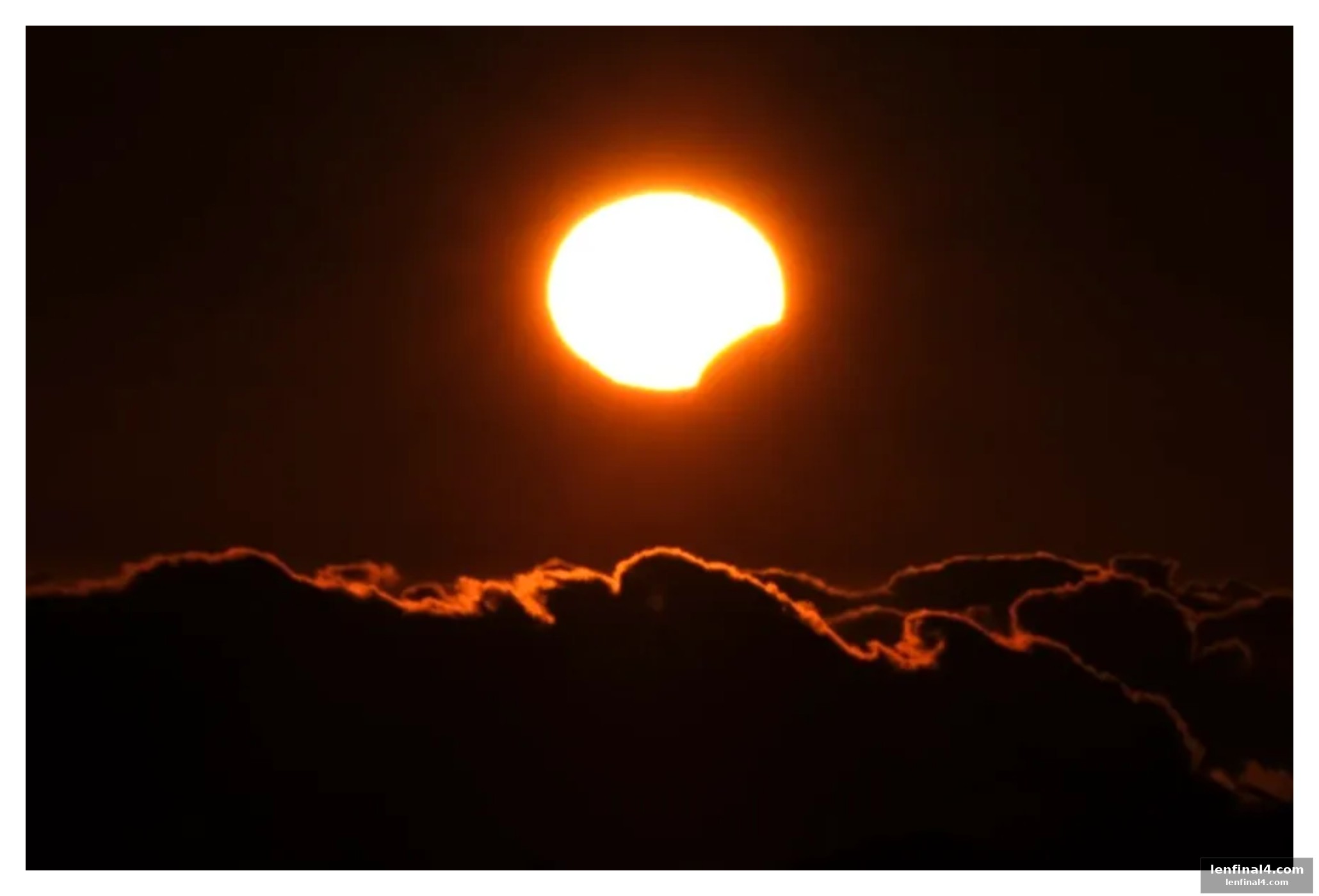
The numbers tell the story
This isn’t a fleeting event; it unfolds over several hours. The partial eclipse begins globally at 15:23 UTC. The total phase commences at 16:58 UTC. The eclipse reaches its maximum intensity at 17:46 UTC. The total phase concludes at 18:33 UTC. The partial eclipse ends at 20:08 UTC. Note: For Colombia (UTC-5), the peak will occur around 12:46 p.m., although, as previously stated, the event will remain invisible here.
Beyond the skies: how to experience it
While we can’t witness it directly in the Colombian sky, technology allows us to experience it safely. Official broadcasts from NASA, the Global Telescope Network Observatory, and Caracol Radio will provide live coverage with experts and high-definition cameras from Spain and Iceland. If you plan to travel, remember: never look directly at the Sun without proper protection. ISO 12312-2 certified solar viewing glasses are essential. Using sunglasses or smoked glass can cause irreversible damage to your retina. Citizen science projects will also allow mobile applications to track temperature changes or animal behavior during the eclipse, contributing to international scientific databases.
Looking ahead: lunar eclipses offer hope
For astronomy enthusiasts in Colombia, patience is key. While 2026 may leave us ‘in the dark’ regarding visibility, the astronomical calendar holds other events. Lunar eclipses are far more frequent and offer excellent viewing opportunities. Future solar eclipses – partial or annular – of significant magnitude will return to the country in the 30s and 40s. And that’s it.