
Duisburg coach erupts: blames referee, aachen tactics after loss
Aachen – Dietmar Hirsch, coach of MSV Duisburg, didn't mince words following his team's 3-1 defeat at the hands of Alemannia Aachen, unleashing a torrent of criticism directed at the referee, the opposing team's perceived gamesmanship, and even his own players to a degree. The loss marks Duisburg’s eighth of the season, a stark contrast to the four victories they'd strung together previously.
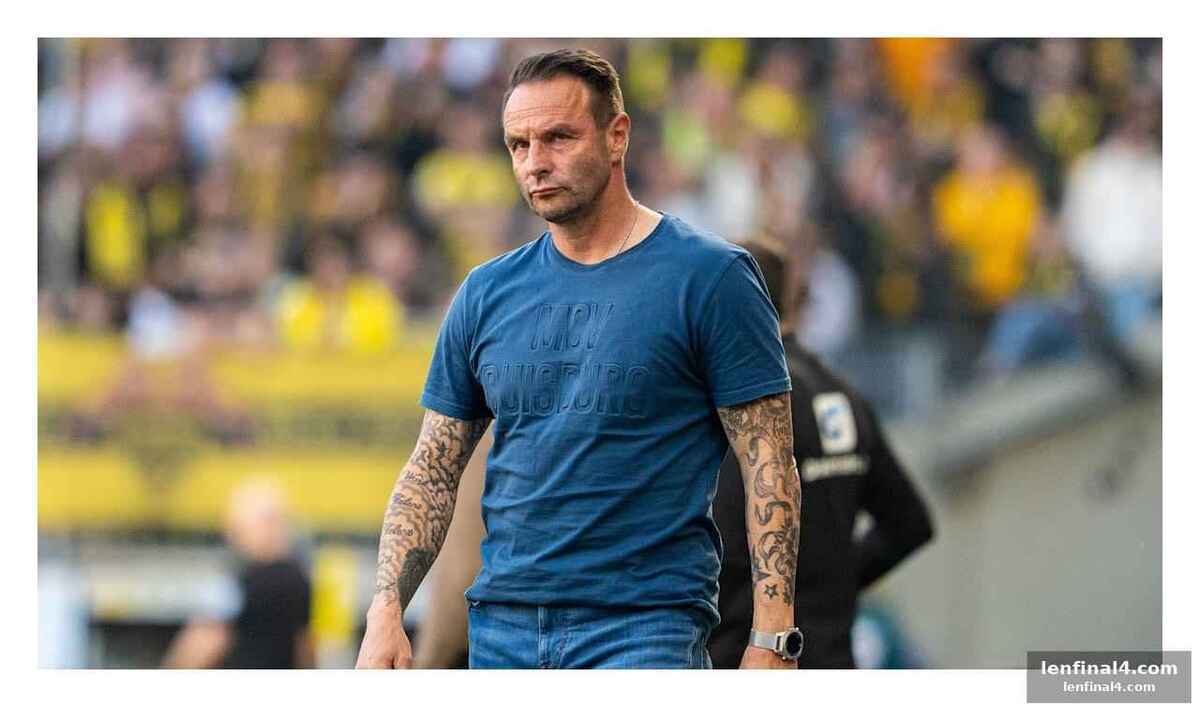
Hirsch's frustration boils over
Speaking after the match on MagentaSport, Hirsch initially framed his comments with a touch of self-deprecation, stating, “I’m probably a bad loser today.” But the admission quickly gave way to a detailed and pointed dissection of the contest, painting a picture of a team undone not just by their own errors – “We lost the ball cheaply, gifted them goals,” he conceded – but also by external factors.
The flashpoint appeared to be the yellow card issued to Ben Schlicke for a challenge on Gianluca Gaudino. Hirsch was adamant it shouldn't have been given, arguing that Schlicke had also made contact with the ball. “He shouldn’t have gotten a yellow card at all,” Hirsch asserted, before highlighting several perceived fouls committed by Aachen players that went unpunished. He accused referee Lukas Benen of applying “a double standard,” a claim he punctuated with the observation that “even the fourth official was getting worked up about it.”
Beyond the officiating, Hirsch leveled accusations of deliberate time-wasting against Alemannia. “The way Alemannia, especially in the second half, slowed the game down with interruptions was extremely unfair,” he claimed, adding that the ref added a staggering seven minutes of stoppage time despite a lack of significant incidents.
He questioned whether an Aachen side of their caliber needed to resort to such tactics, stating, “I don’t believe a team with Aachen’s quality and ability needs to consciously slow the game down like that. It’s not right.” Hirsch drew a distinction between what he considered clever play and outright unfairness, suggesting that while similar tactics might be deemed “clever” in his own stadium, he found them unacceptable.
Despite acknowledging that Duisburg hadn't played at their best – “We didn’t lose here as a clearly inferior team,” he insisted, noting lapses in concentration and defensive errors – Hirsch’s frustration was palpable. He contrasted this match with previous defeats where “we were simply completely awful,” highlighting that this setback, while painful, felt particularly undeserved.
With Essen and Cottbus potentially pulling away in the promotion race, MSV Duisburg now faces a crucial upcoming fixture against Energie Cottbus. “We need to get nine points, we even have to, to secure second or at least third place. And we’ll naturally try to do that,” Hirsch declared, a clear indication that the team's ambitions remain firmly intact, despite the recent setback and the simmering frustration of their coach. The road to promotion just became significantly more precarious, fueled by a manager unwilling to accept defeat quietly.