
Bayern chaos: dingert admits diaz red card was a mistake
Munich descended into turmoil Saturday afternoon as Schiedsrichter Christian Dingert conceded a critical error in sending off bayern Munich’s Luis Díaz against Bayer Leverkusen. The decision, made in the 84th minute, effectively cost bayern a crucial point in the Bundesliga title race, and the admission from the man in the middle has ignited a firestorm of controversy.
A clash of perspectives: what really happened?
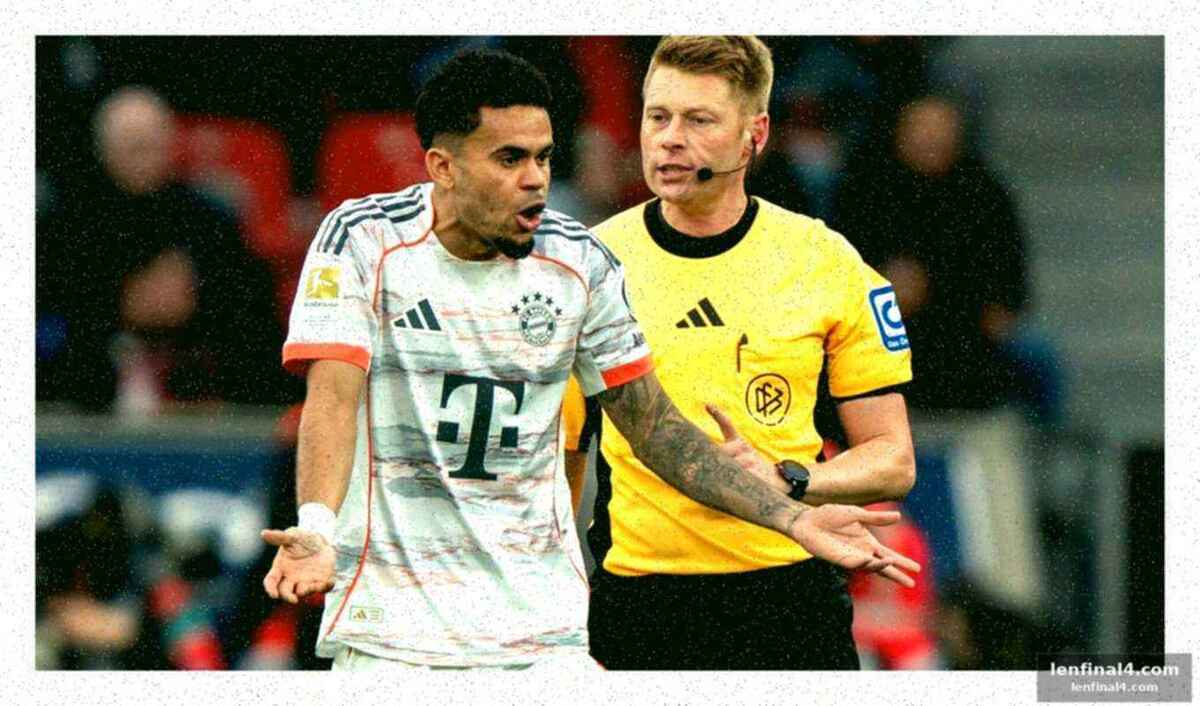
The incident stemmed from a challenge in the Leverkusen penalty area. Díaz, already on a yellow card, went down under pressure from Janis Blaswich, prompting Dingert to brandish a second yellow and a subsequent red. The replays, however, tell a different story. Blaswich’s trailing leg made contact with Díaz’s foot, a detail seemingly missed by Dingert in the heat of the moment. The decision to award a free kick and a sending off, rather than a penalty and a caution, has been widely condemned.
“From the game’s perspective, it looked clear to me,” Dingert conceded in an interview with BR, acknowledging the error. “But when I look at the images now, the red card is very harsh. I wouldn’t give it now with the images.” The admission underscores the immense pressure referees operate under, making split-second decisions with global consequences. It also highlights the ongoing debate surrounding the use and efficacy of VAR, particularly regarding yellow card decisions, which, notably, cannot currently be reviewed by the video assistant.
The ripple effects are already being felt. Uli Hoeneß, bayern’s honorary president, unleashed a scathing critique, labeling it “the worst performance by a referee team I have ever seen in a Bundesliga game.” Vincent Kompany, bayern’s coach, echoed the sentiment, expressing his disappointment with the officiating.
Var's limitations & the future of officiating
The fact that the VAR team didn't intervene has only intensified the criticism. The current regulations prohibit VAR from reviewing yellow card decisions, a rule slated to change next summer. “The VAR cannot intervene at that moment. That is supposed to come in the summer. We can't do anything about it at the moment,” Dingert stated, a frustrating admission for bayern fans.
Beyond this specific incident, the episode raises broader questions about the consistency and transparency of officiating in German football. While Dingert’s willingness to admit his mistake is commendable, the damage is done. The result, a 1-1 draw, leaves Bayern facing a stiffer challenge in their quest for the Bundesliga title. The incident serves as a stark reminder that even the most experienced officials are fallible, and that the stakes in modern football are higher than ever.
The Bundesliga landscape is now irrevocably altered, not just by the dropped points, but by the unsettling realization that a single, flawed decision can reshape an entire season. The lingering question now is: how can officiating be improved to prevent similar incidents from occurring in the future? The pressure is on to refine the VAR system, provide referees with better training and support, and ultimately, ensure that the integrity of the game remains paramount.